• Grammar Techniques

    Grammar is central to the teaching and learning of languages. It is also one of the more difficult aspects of language to teach well. Language teachers and language learners are often frustrated by the disconnect between knowing the rules of grammar and being able to apply those rules automatically in listening, speaking, reading, and writing. This disconnect reflects a separation between declarative knowledge and procedural knowledge[...]

  • Improving Learners' Writing skills

    I am sure that we, as teachers, all suffer from the problem of writing with our pupils. Teachers agree that the majority of their pupils are not able to formulate a sentence, not only a paragraph. This is quite common among secondary school students. Even though they know the structure, the grammar rules and the vocabulary necessary, pupils remain unable to write paragraphs. Writing is necessary for them in so many ways being one of the purposes of their study of English, as well as one of the main sections of the final exams.[...]

  • What should go into an English language lesson?

    Planning is one of those essential skills of the competent teacher.. Every lesson and class is different. The content depends on what the teacher wants to achieve in the lesson. However it is possible to make some generalisations. Students who are interested in, involved in and enjoy what they are studying tend to make better progress and learn faster. [...]

  • This is Slide 4 Title - NewBloggerThemes.com

    This is slide 4 description. This Blogger Template is Designed By NewBloggerThemes.com. Go to Edit HTML and find this content. Replace it your own description. For More Blogger Templates, please visit NewBloggerThemes.com. If you need a premium blogger template or customize this template then contact me[...]

  • This is Slide 5 Title - NewBloggerThemes.com

    This is slide 5 description. This Blogger Template is Designed By NewBloggerThemes.com. Go to Edit HTML and find this content. Replace it your own description. For More Blogger Templates, please visit NewBloggerThemes.com. If you need a premium blogger template or customize this template then contact me[...]

  • This is Slide 6 Title - NewBloggerThemes.com

    This is slide 6 description. This Blogger Template is Designed By NewBloggerThemes.com. Go to Edit HTML and find this content. Replace it your own description. For More Blogger Templates, please visit NewBloggerThemes.com. If you need a premium blogger template or customize this template then contact me[...]

Showing posts with label secondary school. Show all posts

Monday, April 08, 2013

Posted by bibbah
1 comment | Monday, April 08, 2013
 Have you ever wondered why a word is not pronounced as it is spelt? I am sure, you would have felt awkward more than once over this issue. Sometimes they arise due to silent letters whereas at other times it is due to stressed pronunciation. These are the two major categories of confusion when it comes to English pronunciation. In this article we would explore the possibilities and nuances of silent words and their pronunciation.

Silent Letters

Let us begin by understanding what a silent letter is in alphabetic writing system. A silent letter is a letter that appears in a particular word, but it has no effect on the pronunciation of the word. In other words silent letters effectively exist in written world whereas they do not make their presence felt in verbal world. This fine line of difference not only causes problems for non-native English speakers but also for the native English speakers. It becomes difficult to guess the spelling of the word by hearing its pronunciation.

Causes for silent letters:

Over the period of time the sound has dropped out of the spelling of the word. This essentially means they would still be retaining the same spelling but a different pronunciation. The word knot would fit this historical change quite aptly. Apart from this historical change, the major cause of these silent letters is English language borrowings from other languages. Words like Khaki made their presence felt from non-native English origins. Since accent and pronunciation differ, letters may be silent for some speakers but not for the others. In some accents, is silent in such words as hard, feathered; in h-dropping accents, is silent. A speaker may pronounce in “often” or “tsunami” or neither or both. All of these make silent letters more than important for English communication. Just to quote an example, how else would you differentiate a whole from a hole or a plumb from a plum without the help of silent letters?

Examples of Silent Letters

Unfortunately there are no hard and fast rules to learn silent letters. Their usage is learnt by prior exposure and experience. Here is a list of silent letters for your learning purpose.


Check out this video for more details 


Posted by bibbah
No comments | Monday, April 08, 2013

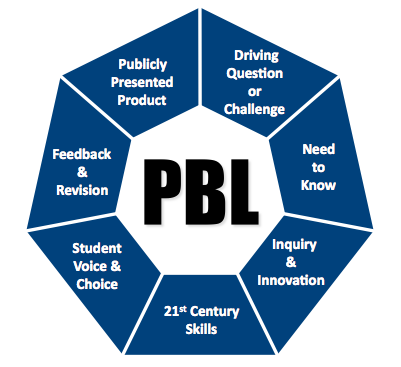
 What is Project-based Learning? 
PBL is an approach to instruction that shifts from traditional teaching practices characterized by short, isolated, and teacher-centered lessons. Instead, it emphasizes learning that can be derived from long-term activities, which are interdisciplinary, student-centered, and integrated with real world issues and practices (Solomon, 2003; Staff, 2001; Willie, 2001). Many of the skills learned through PBL are those desired by today's employers, including the ability to work well with others and handle interpersonal conflicts, make thoughtful decisions, practice initiative, and solve complex problems (Kloppenborg & Baucus, 2004).
Students are provided an interdisciplinary approach to learning and in the process made to develop several skills successively or at the same time as they work on a challenging project (Solomon, 2003). 3  
1.  Definition from the Autodesk Foundation :

We believe that PBL is at the heart of good instruction because it brings together intellectual inquiry, rigorous real-world standards, and student engagement in relevant and meaningful work. It is a comprehensive instructional model in which project work is central to student understanding of the essential concepts and principles of the disciplines. Well crafted projects:
• Engage and build on student interests and passions
• Provide a meaningful and authentic context for learning
• Immerse students in complex, real-world problems/ investigations without a predetermined solution
• Allow students to take the lead, making critical choices and decisions
• connect students with community resources and experts
• Require students to develop and demonstrate essential skills and knowledge
• Draw on multiple disciplines to solve problems and deepen understanding
• Build in opportunities for reflection and self-assessment
• Result in useful products that demonstrate what students have learned
• Culminate in exhibitions or presentations to an authentic audience


2.  The Importance of Conceptual Model for PBL
Those who advocate for PBL do not necessarily assert that it is exclusively the most effective educational approach there is but Staff (2001) observes that it is a way to make students engaged in school work, cut absenteeism, boost cooperative learning skills, and improve test scores. The students were able to develop self-motivation, initiative, and teamwork. In the study of Brunetti, Petrell, and Sawada (2003), higher achievement awareness was evident among students in universities instituting PBL compared to those heavily entrenched in the practice of traditional teaching. The ability to exhibit creativity and analytical skills in solving problems were displayed by the students. The research of Kloppenborg and Baucus (2004) reports on the learning outcomes of students as manifested in their successful experiences gained in planning, managing, and accomplishing projects. Successful experiences include the ability to resolve conflicts through creative problem-solving approaches and the accomplishment of a project that made them more aware of real life problems and issues. Learning then was fruitful for the students involved and not just mere assimilation of content-based knowledge.
3.  Aim & Objectives of Project Work (PW)
PW is an integrated learning experience that encourages students to break away from the compartmentalisation of the different disciplines. It aims to provide students with opportunities to explore the inter-relationships and inter-connectedness of subject-specific knowledge. The objectives of PW are to allow students to:
§  Apply creative and critical thinking skills
§  Improve communication skills (both oral and written)
§  Foster collaborative learning skills
§  Develop self-directed inquiry and life-long learning skills
PW has been implemented in schools since 2000. At secondary level, it is recommended that PW be implemented at Primary 3, Primary 4 and/or Primary 5, and at Secondary 1, Secondary 2 and/or Secondary 3. By 2002, all primary and secondary schools are expected to implement PW at at least one level.
At the pre-university level, PW is implemented at JC1 and CI2. JC1 and CI2 students in 2003 will sit for the PW national examination, and the result obtained will count towards entry into local universities from 2005 onwards.
4.  Features of Project-Based Learning
There are several features that facilitate use of project-based instruction within a classroom. It is important to provide students with a specific focus. What you expect of them from the project. It is important that the project has a real world connection. This can be achieved through making several connections to real life experiences.
The project needs to allow students to not only make real life connections but also implement decision making skills, learning and applying new concepts and using their knowledge through a variety of education contexts.
Working together with others. Collaborating with other students is a key element of Project based learning. As well as teachers and the broader community.
Implementing research in a variety of environmental contexts is imperative through the application of several technologies including, computer programs, audio visual equipment and real life research to ensure that the full experience of the project is gained.

Take a closer look at the wikipedia search result for Project-Based Learning here:  wikipedia

5.  Roles

PBL relies on learning groups. Student groups determine their projects, in so doing, they engage student voice by encouraging students to take full responsibility for their learning. This is what makes PBL constructivist. Students work together to accomplish specific goals.
When students use technology as a tool to communicate with others, they take on an active role vs. a passive role of transmitting the information by a teacher, a book, or broadcast. The student is constantly making choices on how to obtain, display, or manipulate information. Technology makes it possible for students to think actively about the choices they make and execute. Every student has the opportunity to get involved either individually or as a group.
Instructor role in Project Based Learning is that of a facilitator. They do not relinquish control of the classroom or student learning but rather develop an atmosphere of shared responsibility. The Instructor must structure the proposed question/issue so as to direct the student's learning toward content-based materials. The instructor must regulate student success with intermittent, transitional goals to ensure student projects remain focused and students have a deep understanding of the concepts being investigated. It is important for teachers not to provide the students any answers because it defeats the learning and investigating process. Once the project is finished, the instructor provides the students with feedback that will help them strengthen their skills for their next project
Student role is to ask questions, build knowledge, and determine a real-world solution to the issue/question presented. Students must collaborate expanding their active listening skills and requiring them to engage in intelligent focused communication. Therefore, allowing them to think rationally on how to solve problems. PBL forces students to take ownership of their success.

6.  Purpose

Project-based learning (PBL):
best defined as instruction relating questions and technology relative to the students' everyday lives to classroom projects. Students form their own investigation of their own group which allows students to develop valuable research skills. The students engage in design, problem solving, decision making, and investigative activities. It allows students to work in groups or by themselves and allows them to come up with ideas and realistic solutions or presentations. Students take a problem and apply it to a real life situation with these projects.
Project-based Learning (PBL) provides complex tasks based on challenging questions or problems that involve the students' problem solving, decision making, investigative skills, and reflection that include teacher facilitation, but not direction. Project Based Learning is focused on questions that drive students to encounter the central concepts and principles of a subject hands-on.
With Project-based learning students learn from these experiences and take them into account and apply them to their lives in the real world.

7.  Structure

Project-based learning(PBL): is an approach for classroom activity that emphasizes learning activities that are long-term, interdisciplinary and student-centered. This approach is generally less structured tha teacher-led classroom activities; in a project-based class, students often must organize their own work and manage their own time. Within the project based learning framework students collaborate, working together to make sense of what is going on. Project-based instruction differs from inquiry-based activity by its emphasis on collaborative learning. Additionally, project-based instruction differs from traditional inquiry by its emphasis on students' own artifact construction to represent what is being learned.

8.  Elements

The core idea of project-based learning is that real-world problems capture students' interest and provoke serious thinking as the students acquire and apply new knowledge in a problem-solving context. The teacher plays the role of facilitator, working with students to frame worthwhile questions, structuring meaningful tasks, coaching both knowledge development and social skills, and carefully assessing what students have learned from the experience. Advocates assert that project-based learning helps prepare students for the thinking and collaboration skills required in the workplace.

9.  Teachers’ perception of autonomous learning:

Prior to working on PBL, the two senior teacher researchers A & B, expressed doubt if students will opt to work on a project, which was not directly related to examinations and grades. “Our students in government colleges are comparatively slow, lazy, lack concentration to work and are not often ready to accept new ideas.” Researcher C opined that “there is always unlimited capacity in every learner to learn, only the learning environment is limited.” However, Researcher D gave a more positive response, saying “my learners are enthusiastic about learning English. I believe that if this enthusiasm is channeled and guided properly, they are surely capable of learning on their own.” Researcher A and E accepted that they had “never heard of the term ‘learner autonomy’ ” Also, the interviews brought out the fact that none of them had ever considered learner autonomy as a teaching strategy. This may suggest that teachers are unaware of this as a rich resource for effective learning.

  10.  Learners’ views:

1.   Lack of time

 Although most of the learners enjoyed the PBL activity, but a few complained of lack of time. “ It gets stressful sometimes when we get many assignments of other subjects and we have to do this. One cannot give much time to this and enjoy it [E22]                                                                                                                                     

2.   Group Dynamics

An interesting fact that emerged in the general analysis the pre-PBL questionnaire was that the majority of learners who opted for working alone had secured high marks in public exams and perhaps did not feel the need for group/peer support.
Another view is presented by a learner [E10] “I hope this research goes well. One thing: this programme has already proven to me: Its very difficult for girls to work together in a group especially if two of them want to be ‘the boss.’  This problem was also voiced in the group interview. One interviewee said ‘there should be rules of behaviour in projects like these.’  A revealing reflection is given by another learner [E29] of the same group.
the planning of the newspaper, but the teacher’s coordination made it easy.

3.   Teachers’ Role

For learners, the teacher is still a very important figure in the PBL. “ At first I was quite confused about the planning of the newspaper, but the teacher’s coordination made it easier.”

Sunday, April 07, 2013

Posted by bibbah
No comments | Sunday, April 07, 2013
The Competency-Based Approach to Training


Throughout the world, millions of students go to school every day. These students study subjects such as science, language and mathematics in courses usually scheduled to last the duration of the school year. Because progression through the various subjects in school is time-based, at any given time during the year the teacher is expected to be at a specific point in the textbook or course content. 
While not every student may progress at the same rate, the schedule typically requires everyone to move at the same rate as the teacher. Tests are administered periodically to ensure students understand the concepts and principles. Test scores often are compared to determine the grades of the students. Unfortunately, when a student does not do well on a test there often is little time for individual assistance as the teacher must move on in order to adhere to the established time schedule. 


While traditional, time-based approaches to education have met with varying levels of success over the years, it is an ineffective system when the goal is to train individuals to perform specific, job-related skills. For example, an active, certified airline pilot is attending a 3-week training course to learn to fly a new type of aircraft. Will attending all sessions during the course ensure the pilot can fly the plane? Of course not! If the pilot is unable to attend 2 days of the course, does this mean the pilot cannot fly the plane? Probably not. After 4 days, the pilot does poorly on a written test. Should the pilot immediately fail the course or should the pilot continue with assistance and be given the opportunity to be tested again? 
If the pilot can pass all written tests does this indicate that the pilot can fly the plane? No! In addition to assessing knowledge, an evaluation of the pilot’s skills also is required.
Obviously, the time-based educational system used in schools and universities is not appropriate when conducting training. A more appropriate approach is competency-based training (CBT).
In a traditional educational system, the unit of progression is time and it is teacher-centered. In a CBT system, the unit of progression is mastery of specific knowledge and skills and is learner- or participant-centered. Two key terms used in competency-based training are:
·       Skill—A task or group of tasks performed to a specific level of competency or proficiency which often use motor functions and typically require the manipulation of instruments and equipment (e.g., IUD insertion or Norplant ® implants removal). Some skills, however, such as counseling, are knowledge- and attitude-based. 
·       Competency—A skill performed to a specific standard under specific conditions.
 There appears to be substantial support for competency-based training. Norton (1987) believes that competency-based training should be used as opposed to the “medieval concept of time-based learning.” Foyster (1990) argues that using the traditional “school” model for training is inefficient. After in-depth examinations of three competency-based programs, Anthony Watson (1990) concluded that competency-based instruction has tremendous potential for training in industry. Moreover, in a 1990 study of basic skills education programs in business and industry, Paul Delker found that successful training programs were competency-based.
A competent clinician (e.g., physician, nurse, midwife, medical assistant) is one who is able to perform a clinical skill to a satisfactory standard. Competency-based training for reproductive health professionals then is training based upon the participant’s ability to demonstrate attainment or mastery of clinical skills performed under certain conditions to specific standards (the skills then become competencies). Norton (1987) describes five essential elements of a CBT system:
·       Competencies to be achieved are carefully identified, verified and made public in advance. 
·       Criteria to be used in assessing achievement and the conditions under which achievement will be assessed are explicitly stated and made public in advance. 
·       The instructional program provides for the individual development and evaluation of each of the competencies specified. 
·       Assessment of competency takes the participant’s knowledge and attitudes into account but requires actual performance of the competency as the primary source of evidence. 
·       Participants progress through the instructional program at their own rate by demonstrating the attainment of the specified competencies.

How does one identify a competency-based training program? In addition to a set of competencies, what other characteristics are associated with CBT? According to Foyster (1990), Delker (1990) and Norton (1987) there are a number of characteristics of competency-based programs. Key characteristics are summarized in Table 1.
Table 1. Characteristics of Competency-Based Training Programs
  • Competencies are carefully selected. 
  • Supporting theory is integrated with skill practice. Essential knowledge is learned to support the performance of skills. 
  • Detailed training materials are keyed to the competencies to be achieved and are designed to support the acquisition of knowledge and skills. 
  • Methods of instruction involve mastery learning, the premise that all participants can master the required knowledge or skill, provided sufficient time and appropriate training methods are used. 
  • Participants’ knowledge and skills are assessed as they enter the program and those with satisfactory knowledge and skills may bypass training or competencies already attained. 
  • Learning should be self-paced. 
  • Flexible training approaches including large group methods, small group activities and individual study are essential components. 
  • A variety of support materials including print, audiovisual and simulations (models) keyed to the skills being mastered are used. 
  • Satisfactory completion of training is based on achievement of all specified competencies.
One of the primary advantages of CBT is that the focus is on the success of each participant. Watson (1990) states that the competency-based approach “appears especially useful in training situations where trainees have to attain a small number of specific and job-related competencies” (page 18). Benefits of CBT identified by Norton (1987) include:
·       Participants will achieve competencies required in the performance of their jobs. 
·       Participants build confidence as they succeed in mastering specific competencies. 
·       Participants receive a transcript or list of the competencies they have achieved. 
·       Training time is used more efficiently and effectively as the trainer is a facilitator of learning as opposed to a provider of information. 
·       More training time is devoted to working with participants individually or in small groups as opposed to presenting lectures. 
·       More training time is devoted to evaluating each participant’s ability to perform essential job skills.
While there are a number of advantages of competency-based training, there also are some potential limitations. Prior to implementing CBT, it is important to consider these limitations:
·       Unless initial training and followup assistance is provided for the trainers, there is a tendency to “teach as we were taught” and CBT trainers quickly slip back into the role of the traditional teacher. 
·       A CBT course is only as effective as the process used to identify the competencies. When little or no attention is given to identification of the essential job skills, then the resulting training course is likely to be ineffective. 
·       A course may be classified as competency-based, but unless specific CBT materials and training approaches (e.g., learning guides, checklists and coaching) are designed to be used as part of a CBT approach, it is unlikely that the resulting course will be truly competency-based.
Models and simulations are used extensively in competency-based training courses. Airplane pilots first learn to fly in a simulator. Supervisors first learn to provide feedback to employees using role plays during training. Individuals learning to administer cardiopulmonary resuscitation (CPR) practice this procedure on a model of a human (mannequin).
Satur and Gupta (1994) developed a model which facilitates skill development in performing and evaluating coronary anastomoses with an angioscope. The results of their study indicate that models are proving invaluable as a training tool. George H. Buck in a 1991 historical review of the use of simulators in medical education concluded that “Given the developments in this technology within the last 50 years, it is possible that the use of simulators will increase in the future, should the need arise to teach new concepts and procedures at set times to large groups of individuals” (p. 24). Researchers in two different experimental studies involving training people to perform breast self-examinations (BSE) compared several methods and found that using models was the most effective training method (Campbell et. al., 1991 and Assaf et. al., 1985). In a multicenter evaluation of training of physicians in the use of 30-cm flexible sigmoidoscopy, Weissman et al (1987) found that they were easily trained by first practicing on plastic colon models.
Norton (1987) believes that participants in a competency-based training course should learn in an environment that duplicates or simulates the work place. Richards (1985) in writing about performance testing indicates that assessment of skills requires tests using simulations (e.g., models and role plays) or work samples (i.e., performing actual tasks under controlled conditions in either a laboratory or a job setting). Finally, Delker (1990) in a study of business and industry found that the best approach for training involved learner-centered instruction using print, instructional technology and simulations.
Evaluation in traditional courses typically involves administering knowledge-based tests. While knowledge-based assessments can certainly be used in CBT to measure mastery of information, the primary focus is on measuring mastery of skills. In keeping with this, Thomson (1991) reports that the decision to recognize a performance as satisfactory and to determine competence should be the basis for success of a competency-based program. Moreover, Foyster (1990) argues that assessment in competency-based programs must be criterion-referenced with the criterion being the competencies upon which the program is based. Finally, Richards (1985) indicates that simulation and work sample performance tests should include a checklist or some type of rating scale.

Text Widget

Unordered List